








Geopolitics, Justice and the Future of the Web Take Centre Stage on Day 4 of Jaipur Literature Festival
Day 4 of the Jaipur Literature Festival 2026 featured powerful discussions on geopolitics, justice, leadership, and the future of the internet. Speakers including Justice D.Y. Chandrachud, Vir Das, Richard Flanagan, Leo Varadkar, and Sir Tim Berners-Lee reflected on constitutional values, global conflicts, grief, and digital rights. The day reaffirmed JLF’s role as a global platform where literature, politics, law, and technology come together to shape conversations on the present and future.
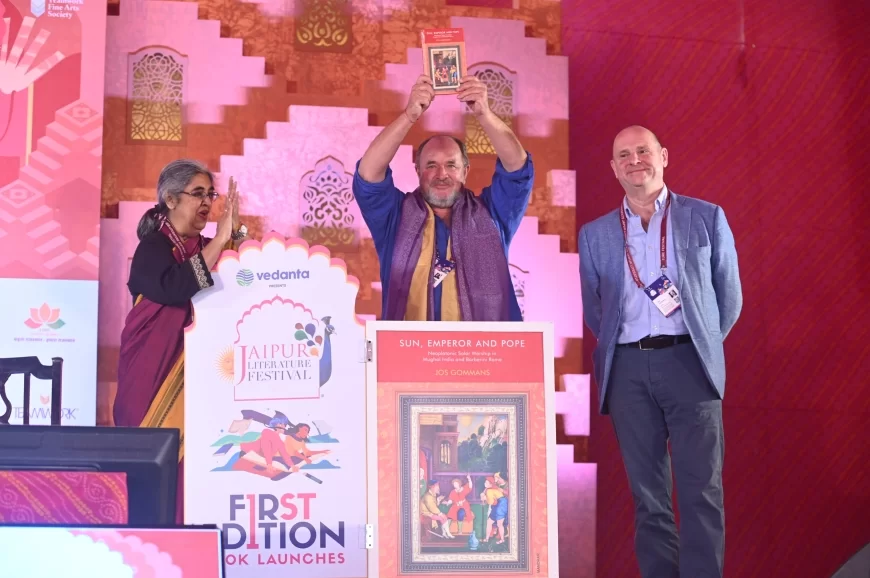
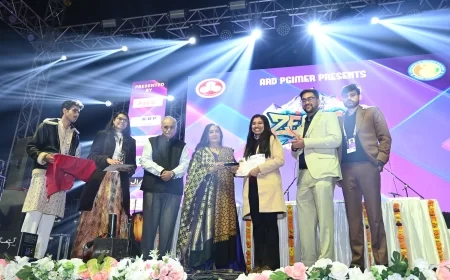
Jaipur, January 18, 2026: Day 4 of the Jaipur Literature Festival (JLF), presented by Vedanta, continued the festival’s legacy as a global platform for ideas, bringing together influential voices from literature, politics, law, and technology. The day witnessed wide-ranging conversations on power, justice, leadership, memory, conflict, and the future of the digital world, reaffirming JLF’s role as a space where critical debates shaping the present and future converge.
The festival carried forward its intellectual momentum from Day 3, which featured a much-anticipated session with comedian and actor Vir Das. Speaking on grief, Das described it as “an inability to breathe fully,” reflecting on how loss reshapes both the body and the spirit when someone who once existed outside us begins to live within. He also shared a deeply personal moment from the night he won an Emmy, recalling how he reflected on his journey from working as a dishwasher in Chicago to receiving one of the highest honours in global entertainment.
One of the major literary highlights of Day 4 was acclaimed novelist Richard Flanagan in conversation with journalist Tim Adams. The discussion focused on the moral urgency of literature in an era marked by ecological collapse, political instability, and contested histories. Flanagan spoke about the responsibility of writers to bear witness and challenge complacency through storytelling. Drawing from his work, he explored how personal memory intersects with science, history, and global events, observing that memory is not always an act of testimony but often an act of creation.
Geopolitical tensions dominated the session A Continent in Crisis: Russia, Ukraine and the European Story, where former Polish Foreign Minister Radosław Sikorski joined diplomat-author Navtej Sarna. The conversation examined the Russia–Ukraine war, Europe’s political fault lines, Russia’s strategic ambitions, and the broader implications for European unity and global security.
In Speaking My Mind, Ireland’s former Taoiseach Leo Varadkar appeared in conversation with Georgina Godwin. Introduced by Kevin Kelly and supported by the Embassy of Ireland in India and Culture Ireland, Varadkar offered candid insights into political leadership, public life, and the personal convictions that influence decision-making in government.
One of the most significant sessions of the day was Ideas of Justice, featuring former Chief Justice of India D. Y. Chandrachud in conversation with senior journalist Vir Sanghvi. Drawing from his book Why the Constitution Matters, Justice Chandrachud spoke on constitutional morality, judicial independence, and the evolving meaning of justice in a diverse democracy. He stressed that justice is not abstract but lived, rooted in transparency, fairness, and accountability. Describing the Constitution as the “common stone” holding society together, he highlighted how courts have expanded its meaning to include dignity, liberty, and the right to a speedy trial.
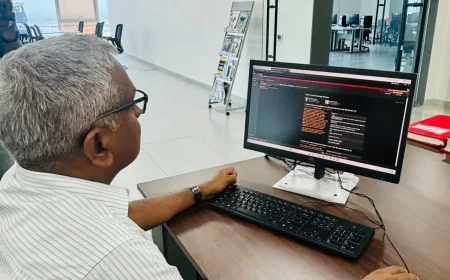
Technology and digital rights took centre stage in This Is For Everyone, presented by HPCL–Mittal Energy Limited, where Tim Berners-Lee, the inventor of the World Wide Web, spoke with Georgina Godwin. Berners-Lee emphasised decentralisation, digital rights, and the urgent need to protect the web as a public good amid growing corporate and political control.
The day concluded on a literary note with The Murder Dialogue, featuring filmmaker and actor Anirban Bhattacharyya and writer Rudraneil Sengupta in conversation with author Amrita Mahale. Bhattacharyya discussed Swipe Right to Kill, tracing the psychological shift that leads a woman to commit murder after conning men on dating apps, while Sengupta reflected on The Beast Within, drawing from years of embedded reporting with the Delhi Police to centre a victim often forgotten by society.
As Day 4 drew to a close, the Jaipur Literature Festival once again demonstrated its unique ability to bring literature, politics, law, and technology into a single global conversation. The festival continues to serve as a forum where the complexities of the modern world are examined and more just, inclusive futures are imagined.
The final day of the festival will feature major conversations with Alice Oswald, Jeet Thayil, Yoshitoki Ōima, Anand Neelakantan, and Janina Ramirez, among others.
What's Your Reaction?
 Like
0
Like
0
 Dislike
0
Dislike
0
 Love
0
Love
0
 Funny
0
Funny
0
 Angry
0
Angry
0
 Sad
0
Sad
0
 Wow
0
Wow
0